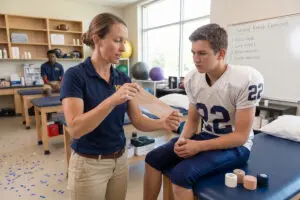
Train Hard. Recover Smarter. A First-Season Guide for High School Athletes
Stepping up from middle school, club, or recreational sports into a high school athletics program is exciting—and a major adjustment. Suddenly, your schedule may include longer practices, formal strength training, games, travel, early-morning meetings, and the everyday pressure of keeping up with schoolwork.
It is normal to feel energized by the challenge. It is also normal to feel completely wiped out by week three.
Training hard matters, but learning how to recover is what helps athletes keep showing up, learning, and improving throughout a full season. Your first high school season is not about proving how exhausted you can become. It is about building habits that help you train consistently, recognize when something needs attention, and enjoy the sport for the long term.
Your First Season Is a Learning Season
When you are new to high school sports, it can be tempting to measure your effort by how sore or tired you feel after practice. You may think that if you are not exhausted every day, you are not working hard enough.
In reality, the first season is a learning curve. Your body is adapting to a new workload, new movements, and a more demanding schedule. Some muscle soreness and general tiredness can be part of that adjustment. But there is a difference between normal training fatigue and pain or exhaustion that deserves attention.
Learning to notice that difference is one of the most valuable skills a young athlete can build.
1. Recovery Is Part of Training
Recovery is not “skipping work” or being lazy. Training challenges your body; recovery is the time that helps you adapt to that challenge and return ready for the next practice, workout, or game.
A few basic habits can make a meaningful difference during a busy season:
Prioritize consistent sleep. During demanding school and competition weeks, sleep supports physical recovery, mental focus, and everyday energy.
Respect planned rest and lighter days. A day away from organized training—or a less intense day—can give both your body and mind time to reset. Rest is part of sustaining progress over a full season.
Eat and hydrate consistently. Balanced meals, snacks that fit your schedule, and regular hydration can help support energy through long school days and afternoon practices.
Follow your team’s cooldown routine. Taking a few minutes to slow down after activity, rehydrate, and transition out of practice can become a useful part of your routine.
Make room for downtime. School, sports, social life, and family responsibilities can add up quickly. Time to relax and mentally reset matters, too. You do not get stronger only during the workout. Your body also needs time and resources to adapt afterward.
Pay attention to ongoing fatigue
Feeling tired after a demanding practice, tournament, or school week is not unusual. But persistent fatigue is worth discussing with a trusted adult—especially if you are sleeping poorly, losing motivation, performing worse, getting sick often, feeling unusually irritable, or struggling to recover between practices.
Training harder is not always the answer. Sometimes the smarter next step is to adjust the schedule, improve sleep, take a lighter day, or ask for guidance from a parent, coach, or athletic trainer. Young athletes need adequate recovery between practices and games, and persistent fatigue can be one sign that a training load needs attention.publications.aap+1
2. Start Gradually Instead of Trying to Do Everything
When you join a new team, you want to prove yourself. That can lead to adding extra workouts, private training sessions, independent runs, or heavy lifting on top of an already demanding team schedule.
Extra work is not automatically bad. But adding too much, too quickly can make it harder to recover and harder to tell the difference between normal adjustment and a problem that needs attention.
Try these practical approaches:
Follow the team plan first. Let your coach’s practice and conditioning schedule be your baseline for the first several weeks.
Add only one thing at a time. If you want to add extra conditioning, strength work, or skill practice, introduce it gradually rather than changing everything at once.
Give your body time to adjust. A new training load may take time to feel manageable. Consistency over several months matters more than one intense week.
Keep some white space in your schedule. Make room for schoolwork, family time, meals, sleep, and mental rest.
Ask before adding more. A coach, athletic trainer, or qualified professional may be able to help you decide whether additional training makes sense for your sport and current workload.
For example, if your team has just increased practice intensity, it may not be the best time to add daily extra runs, a new lifting plan, and weekend private lessons all at once. Choose one priority, build gradually, and pay attention to how your body responds.
3. Normal Soreness vs. Injury Warning Signs
Knowing how your body feels is one of the most valuable skills an athlete can develop. Mild muscle soreness can happen after a new workout, an increase in practice intensity, or a long game. However, sharp pain, worsening symptoms, or pain that changes the way you move should not be ignored.
Use this guide to help distinguish common training soreness from signs that you should stop and speak up.
Often normal after a new or demanding workout
Stop activity and tell an adult
Mild muscle soreness that appears later that day or the next day
Sharp, severe, or sudden pain during a movement
General stiffness that improves as you warm up and move gently
Pain that gets worse while you practice or play
General tiredness after a demanding practice, game, or school week
Swelling, visible bruising, deformity, or a joint that feels unstable
Fatigue that improves with food, hydration, sleep, and recovery time
Numbness, tingling, unusual weakness, dizziness, or trouble bearing weight
A mild ache that improves with rest and does not change movement
Pain that makes you limp, change your form, or avoid using part of your body
Important: This is not a diagnosis guide. If pain is sudden, severe, worsening, causes swelling or loss of normal function, or changes the way you move, stop activity and tell a parent, coach, athletic trainer, or healthcare professional.
Overuse-related problems can develop gradually when repetitive stress outpaces recovery, which is why changes in pain, performance, movement, and fatigue are worth addressing early.
4. Build a Simple Post-Practice Routine
Recovery does not need to mean an elaborate one-hour routine, expensive equipment, or complicated supplements. Consistency is more helpful than complexity.
Try this simple post-practice reset:
Cool down. Follow your team’s planned cooldown after practice or competition.
Hydrate. Drink water and continue rehydrating over the evening.
Refuel. Have a snack or meal that fits your schedule and helps you recharge after activity.
Change and clean up. Get out of damp practice gear and take care of basic hygiene.
Check in with your body. Ask yourself: What feels tired? What feels unusual? Did anything hurt, swell, or change the way I moved today?
Set up tomorrow. Pack your bag, complete what you can for school, and protect enough time for sleep.
The goal is not to obsess over every ache. It is to build a consistent habit of noticing how you feel, taking care of basic needs, and speaking up early if something seems wrong.
5. Prevention Starts With Everyday Habits
No routine can guarantee an injury-free season. But foundational habits can help athletes train more thoughtfully and avoid ignoring small issues until they become bigger setbacks.
Arrive ready to warm up instead of jumping directly into intense activity.
Learn correct sport-specific and strength-training techniques before adding more speed, weight, or volume.
Wear footwear, uniforms, and protective equipment that fit correctly.
Address practical problems, such as blisters, chafing, loose equipment, or uncomfortable gear, before they become bigger distractions.
Pay attention to recurring soreness, fatigue, or changes in movement.
Respect planned lighter and rest days, especially during busy school, travel, or competition weeks.
Tell a trusted adult when something feels different, painful, or difficult to recover from.
Adequate rest, gradual progression, healthy sleep, and early attention to pain patterns are all part of reducing the risk of overuse-related issues in young athletes.publications.aap+2
Support gear is only one part of the plan
Many athletes keep practical items such as athletic tape, foam underwrap, blister supplies, or a self-adhering support wrap in their training bag. Depending on the activity and advice of a qualified adult, these tools may offer comfort, cushioning, or temporary support.
They should never be used to hide significant pain, force continued play, or replace guidance from a coach, athletic trainer, or healthcare professional.
6. Ask for Help Early
There is a stubborn myth in sports that asking for help or admitting you are hurt makes you look weak. In reality, speaking up early can help protect both your health and your season.
If something feels wrong, talk to:
A parent or guardian
Your coach
A school athletic trainer, if your school has one
A physician, physical therapist, or other qualified healthcare professional
Strong athletes are not the ones who ignore every problem. They are the ones who know when to speak up, adjust, recover, and return ready to train another day.
Think Long-Term
Your first high school season is not about being a polished superstar on day one. It is about learning habits that help you enjoy your sport, build confidence, and improve over time.
Train with purpose. Recover with the same level of intention. And when something does not feel right, speak up early. The habits you build during your first season can support not only the months ahead, but the athlete you continue becoming in the years to come.