Dermatitis Relief: How the Right Cotton Gloves Can Calm Flare-Ups and Protect Irritated Skin
Hand dermatitis — whether allergic contact dermatitis, irritant contact dermatitis, or the overlap of both — is one of the most prevalent and persistently debilitating skin conditions affecting working adults. Unlike eczema on the body, where clothing provides some protection, the hands are constantly exposed and constantly working. When the skin barrier breaks down on the hands, the most routine tasks become painful obstacles.
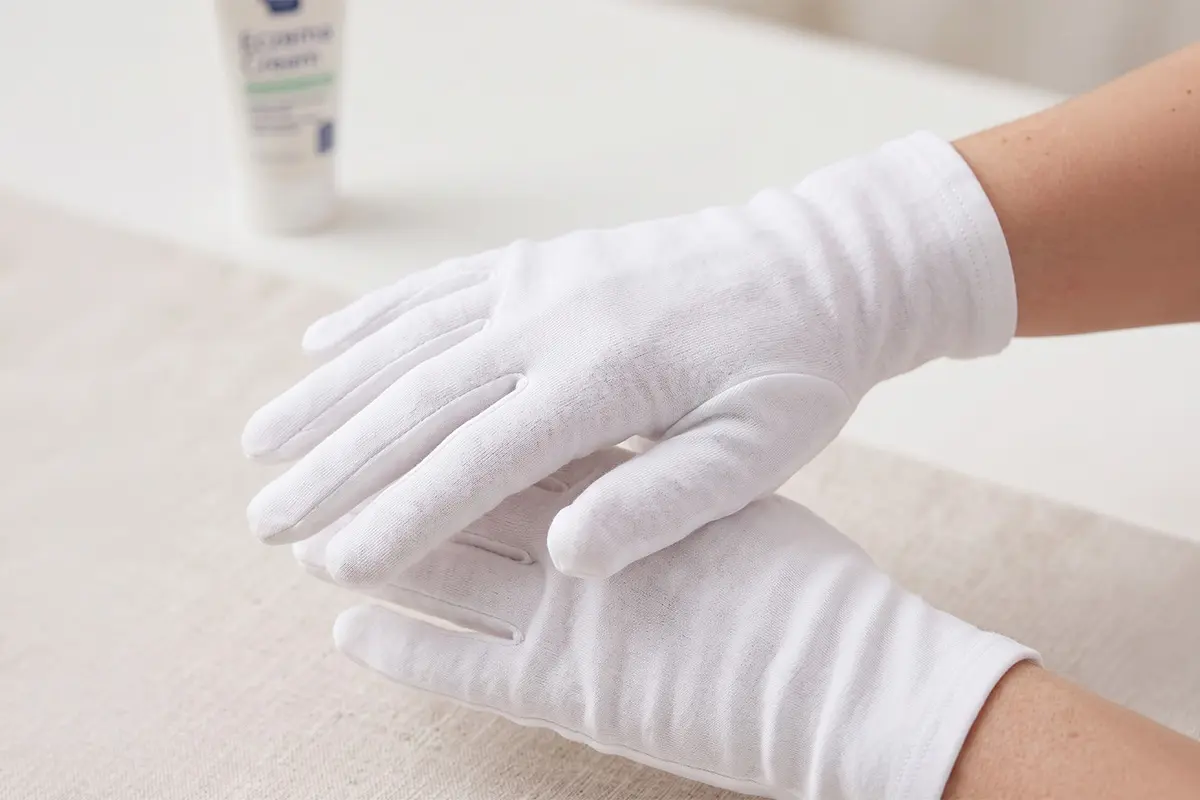
Cotton gloves for dermatitis are among the most consistently recommended interventions by dermatologists. But the clinical benefit depends entirely on using the right type of glove in the right way. This guide covers the biology, the application protocols, and the key features that separate genuinely therapeutic gloves from ones that provide false comfort.
Understanding Contact Dermatitis: Why the Barrier Breaks Down
Contact dermatitis comes in two forms with fundamentally different mechanisms, though they can present nearly identically:
Irritant Contact Dermatitis (ICD)
ICD is caused by direct chemical damage to the skin barrier. The most common culprits are repeated exposure to water (especially with soap or detergent), organic solvents, cleaning chemicals, and even paper and cardboard, which aggressively absorb the skin’s natural oils. ICD is a cumulative damage process — each exposure takes a small toll until the barrier fails entirely.
Allergic Contact Dermatitis (ACD)
ACD is an immune system response. After sensitization to a specific allergen (common ones include nickel in jewelry, chromate in leather, formaldehyde in some cosmetics, and fragrances), the immune system mounts a response on every subsequent exposure. ACD can develop after years of problem-free exposure to the same substance.
In both cases, the clinical picture on the hands is similar: redness, vesicles (small fluid-filled blisters), fissures (deep painful cracks), scaling, and intense pruritus (itching). The treatment strategy is also similar: remove the trigger and protect the barrier while it heals.
The Four Mechanisms by Which Cotton Gloves Help
1. Physical Shielding from Allergens and Irritants
The most direct benefit of dermatological gloves is mechanical: they put a physical barrier between your skin and the substances causing damage. For ICD, this means no direct contact with water, soap, or chemicals. For ACD, it means eliminating the ‘contact’ component.
An important nuance: for tasks involving chemical exposure (dishwashing, cleaning), cotton gloves should be worn underneath rubber or vinyl gloves. Why? Because sweating inside a rubber glove creates a warm, moist environment that can itself trigger dermatitis. The cotton absorbs that sweat, keeping the skin drier and cooler.
2. Thermal Regulation to Reduce Itch
Inflammation and heat have a reinforcing relationship. Inflamed skin is warmer than normal skin, and warm skin itches more intensely. The mechanism involves prostaglandins (inflammatory mediators) that directly stimulate itch receptors, and heat that amplifies their effect by increasing blood flow to the area.
100% cotton has a natural cooling, neutral temperature against the skin. Unlike synthetic gloves that create a thermal ‘greenhouse effect,’ cotton maintains a stable microclimate at the skin surface, moderating the heat-itch amplification cycle.
3. Breaking the Itch-Scratch Cycle
Scratching acutely relieves itch by overriding the itch signal with a pain signal — but it causes direct mechanical damage to the skin barrier and triggers mast cells to release histamine, producing more itch. This cycle is responsible for much of the secondary skin damage in both dermatitis and eczema.
Cotton gloves interrupt this cycle by creating enough of a physical barrier that the act of scratching doesn’t actually damage the skin. Even if the reflex occurs, the fingernails contact the cotton, not the skin. This is most valuable during sleep, when conscious inhibition isn’t possible.
4. Enhancing Topical Medication Efficacy
Dermatologists who prescribe topical corticosteroids or calcineurin inhibitors for hand dermatitis frequently recommend occlusive dressing — covering the medication with cotton gloves after application. Occlusion creates a sealed environment that dramatically increases the penetration of the active ingredient into the deeper layers of the dermis. Studies have shown that occluded topical steroids can achieve 5 to 10 times greater skin penetration than included applications.
Practical Application Protocols
Scenario
Glove Strategy
Duration
Post-Ointment Application
Dry cotton gloves over medicated cream/ointment
Minimum 2 hours; overnight preferred
Household Chores (Wet)
Cotton gloves inside rubber/vinyl gloves
Duration of task
Handling Paper/Cardboard
Cotton gloves alone
Duration of task
Sleeping (Active Flare)
Cotton gloves overnight
Full night
Computer Work
Fingerless cotton gloves if available
Throughout work session
Choosing the Right Cotton Gloves for Dermatitis
The Non-Negotiables
100% cotton construction with no synthetic blends
White or undyed — fabric dyes (especially PPD in dark colors) are contact allergens
Washed and dried before first use to remove manufacturing residues
Replaced regularly — gloves saturated with ointment, sweat, and skin bacteria need daily washing
Avoid These Common Mistakes
Latex or nitrile gloves worn directly against dermatitic skin — rubber accelerators are potent allergens and will worsen ACD
Gloves with decorative elastic or rubber wrist bands — these can be sensitizers
Synthetic ‘spa gloves’ marketed for moisturizing — the gel-lined interior creates heat and moisture that exacerbate dermatitis
Wearing the same unwashed gloves repeatedly — bacteria thrive in the warm, ointment-rich environment
Healit CottonGloves: Designed for Dermatological Demands
Healit’s CottonGloves are manufactured with the specific needs of skin conditions in mind. Made from premium white cotton without synthetic blends or dyes, they’re designed to hide and protect skin disorders while eliminating the fabric stains that come with ointment-based therapies. They’re appropriate for use under the guidance of a dermatologist as part of a comprehensive skin management plan.
When your skin is at its most vulnerable, what you put against it matters more than ever. Healit CottonGloves offer the material purity and construction quality that dermatological skin care demands.